







Artificial intelligence is transforming what unmanned aerial vehicles (UAVs) and other autonomous systems can do. Most of the attention goes to the impressive parts: computer vision, perception, mission autonomy, AI-based decision-making. But beneath all of that intelligence sits a smaller, quieter component that everything else depends on: the flight controller.
The flight controller is what keeps an aircraft stable, responsive, and safe. It processes sensor data, drives the actuators, runs the low-level flight loops, and executes failsafe logic in real time. Put simply, the mission computer decides what the vehicle should do. The flight controller makes sure it can actually do it safely.
As UAVs become more connected and software-defined, that role is changing. The flight controller is no longer just a stabilization component. It is becoming part of the trusted computing foundation of the entire autonomous system, and that changes what we should expect from it.
More capability means more attack surface
Modern UAVs carry more sensors, payloads, communication links, third-party applications, and AI workloads than ever before. That creates enormous operational opportunity. It also creates more ways in.
A compromised firmware image could quietly alter how the system behaves. An unauthorized update could introduce malicious code. A stolen cryptographic key could undermine the device’s identity and its secure communications. A single vulnerable interface could open a path into the wider vehicle architecture.
For a flight controller, these risks carry particular weight, because it directly manages flight-critical functions. A compromise at this level does not just affect data. It can affect the behavior, reliability, and safety of the aircraft itself. That is why security cannot be an add-on bolted on at the end of development. It has to be engineered into the flight controller from the very beginning.
Trust that starts before power-on
What does that look like in practice? A secure flight controller establishes trust from the moment it powers on. Secure boot ensures that only authenticated firmware is allowed to execute, while hardware-backed mechanisms protect cryptographic keys, device identities, and other sensitive credentials.
The same discipline continues through the software lifecycle: signed and authenticated updates prevent unauthorized firmware from being installed, and protected storage and carefully managed interfaces limit the exposure of sensitive data and critical functions. Architecture matters too. Isolating flight-critical control from higher-level workloads prevents a vulnerability in one part of the system from automatically compromising another.
No single security feature is sufficient on its own. Trust emerges from multiple layers of protection working together.
Intelligence up top, control at the core
One of the most important architectural decisions in an advanced autonomous system is the separation of flight-critical control from mission-level intelligence.
The flight controller handles deterministic, real-time functions: stabilization, sensor processing, actuator control, and failsafe behavior. The mission computer handles the higher-level workloads: AI, perception, computer vision, mapping, sensor fusion, and payload processing. Both are essential, but they are not the same computing problem. The simplest way to put it: the mission computer provides intelligence, and the flight controller preserves control.
Keeping these domains separate decouples flight safety from rapidly evolving AI workloads, creates clearer functional boundaries, and allows each platform to be updated, tested, or replaced independently.
Built at TII: the Aegis approach
At TII’s Secure Systems Research Center in Abu Dhabi, these principles have been engineered into Aegis product portfolio through our secure flight-controller platform, designed around reliability, modularity, safety, and secure embedded computing.
In the Aegis architecture, flight-critical control is physically and logically separated from mission and AI computing. The processing platform itself is flexible: depending on mission needs, real-time performance, security requirements, and certification considerations, the flight controller can be built on an NXP i.MX93 platform or on a Microchip FPGA-based architecture, which offers
deterministic processing and hardware-level isolation for the most demanding safety- and mission-critical designs.
Built for real missions, not just proof-of-concept demonstrations, the platform combines ruggedized encloser, secure locking connectors and flexible industrial interfaces, including RS-232, RS-422, RS-485, CAN FD and Ethernet. This allows customers to integrate a wide range of sensors, payloads, and mission systems while maintaining reliable connectivity in highly demanding operational environments.
Resilience is built in as well. A redundant sensor architecture, with multiple IMUs, magnetometers, and barometric sensors, provides cross-validation and graceful degradation if a sensor fails. And because a secure system should never become a closed system, Aegis Product portfolio supports a broad range of industrial interfaces so it can integrate with sensors, communication systems, payloads, mission computers, and third-party subsystems across different platforms.
The objective is not simply to be a more powerful flight controller. It is a trusted, modular embedded control platform that can be adapted to different autonomous platforms and advanced mission requirements.
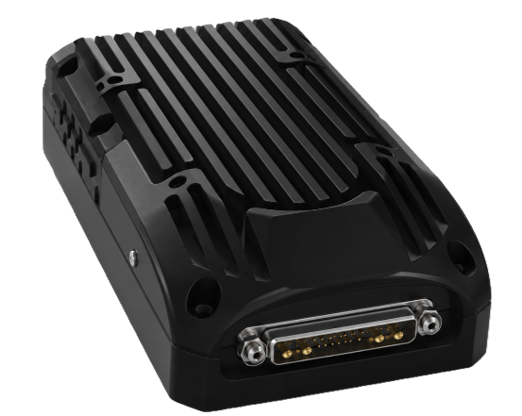
Aegis Flight Controller with NXP i.MX93 or RT1180, Automotive-grade Processor with dual core redundancy.
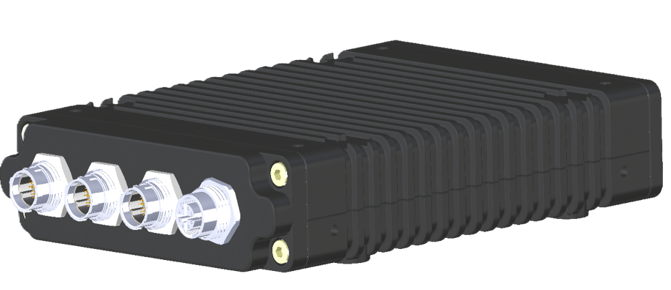
Aegis Ruggedized Dual Redundancy with dual-redundant NXP i.MX93 flight controller. Dual-redundant flight controllers eliminate single points of failure, enabling fault detection, isolation, and continued operation for greater safety and mission reliability.
From research to deployable products
Building a secure prototype is one challenge. Building a product that can survive demanding operational environments is another. A real flight-control product must be manufacturable, testable, ruggedized, and suitable for repeatable production, with reliability, environmental protection, electromagnetic compatibility, and lifecycle management considered from day one.
This is where the Aegis vision goes beyond flight-control software or a processor board:
transforming secure embedded engineering into a ruggedized capability with a clear path toward industrial qualification and certification.
Intelligence is not enough without trust
AI can make an autonomous system more capable. Autonomy can make it more independent. Mission computers can support ever more sophisticated decision-making. But none of it matters if the flight-control system at the core cannot be trusted.
As autonomous systems become more intelligent, connected, and mission-critical, the flight controller must evolve with them: more secure, more modular, more resilient, and ready to integrate into complex mission architectures. The future of autonomous missions begins with a secure and trusted brain at the center of the vehicle. That is where the flight controller sits, and at TII, that is exactly where we are building it.