





Executive Summary
As robots become more sophisticated and capable, they can take more actions autonomously, with less need for human supervision. Such robots can handle many more jobs than earlier models, but their greater complexity makes them expensive to build and maintain, difficult to scale up from the prototype stage, and vulnerable to the potential failure of any one of their many components. Paradoxically, the more a robot can do, the more difficult it can be to deploy for real-world tasks.
A long-established way to overcome this obstacle is to share the complex software and hardware challenges among multiple robots that act in coordination. Even as this robot swarm offers sophisticated and versatile abilities, each individual robot remains relatively simple to build and maintain. The result is a robotic solution that is less costly, easier to scale, and more resilient.
This is the approach taken by swarm robotics, as it has been practiced since the 1980s. However, classical swarm robotics, as traditionally researched, is now partially outdated in its original assumptions. Much of its early work relied on very low-cost, low-capability robots and focused heavily on “biomimicry” -- the imitation of animal swarms (flocks of birds, schools of fish, and the like). Researchers counted on complex behavior to emerge out of the actions of multiple simple robots, each of which could sense very little and do very little computation. These studies were foundational and demonstrated some key strengths of robot swarms: They could be robust in the face of problems, operate without a central controller, and scale up from small deployments. However, they were not designed with modern operational requirements.
Today, the technological context for robots has changed significantly. Advances in embedded computing, edge AI, sensing, and communications mean that compact and relatively affordable robots can do much more – they can perceive more about the world, and act without the need for outside control in many more situations. A “cheap” robot no longer implies a “limited” robot. Today, a robot can be simple from a hardware and maintenance perspective, while being computationally capable and operationally effective.
Therefore, the concept of swarm robotics in 2026, while still valid, requires refinement.
In disaster relief, national-security operations, industrial safety, environmental monitoring and logistics (among other uses), the swarm approach still meets challenges with groups of relatively simple machines, coordinating their actions. Now, though, with intelligence and capability distributed among many machines, swarm solutions are more robust and more cost effective. They also allow artificial intelligence, and autonomous decision making, to be deployed at the site of their work. When each swarm member can handle intensive computation demands, that work does not need to be delegated to a remote server.
With these advances, globally, the field of swarm robotics has reached a critical juncture, moving past theoretical exercises (“toy problems”) toward pragmatic, viable, real-world solutions by integrating newly available technologies – most notably, advanced AI and more capable hardware.
The Technology Innovation Institute (TII) is positioned at the forefront of this evolution, making unique contributions to swarm capabilities in the air (Unmanned Aerial Vehicles), on land (Unmanned Ground Vehicles), and in the ocean, with Unmanned Surface Vehicles and Unmanned Underwater Vehicles. This white paper presents TII’s achievements to date and its vision for a future of robot swarms as key partners for industry and government.
2. Introduction: The Power of Swarms
Today, almost every robot in the world is a “stand alone” device, doing its job without knowing much about what goes on around it. It’s a complex machine that must be monitored to assure its systems are running correctly, and supervised to coordinate its work with others.
There is an alternative strategy, which often provides a more robust and reliable solution: swarms of robots, whose coordination and complex behavior are not directed by a central control computer and are not micro-managed by the operator but rather supervised, adopting a paradigm known as “man-in-the-loop”: Robots do their work with a human being involved as collaborator and supervisor, but not as the controller of every action.
Compared to a single, complex robot solution, these swarms recover more easily from unexpected events, are less vulnerable to failures in components, and require less pre-deployment programming to do their work.
2.1 The Principles of Swarm Robotics
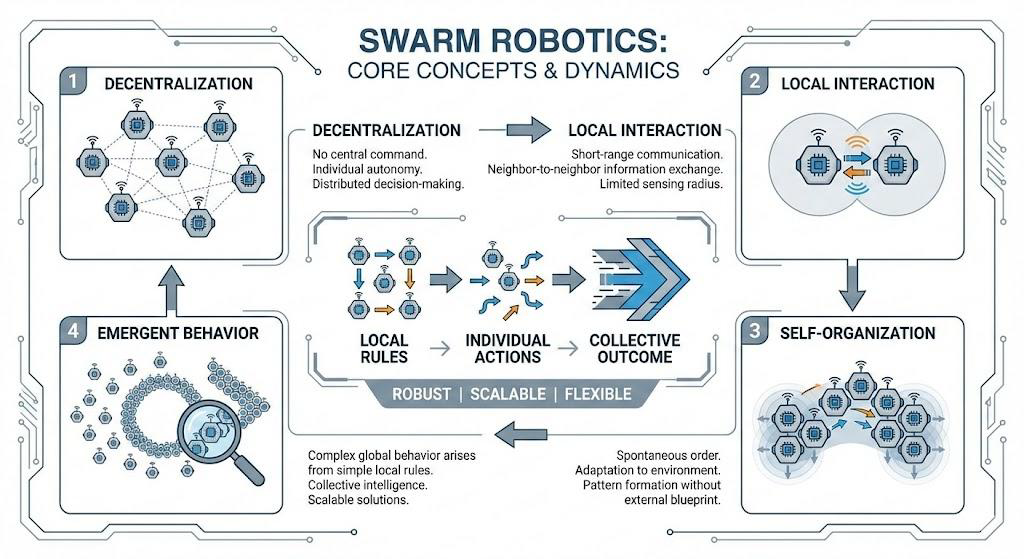
The swarm paradigm is founded on core principles:
• Decentralization: The swarm does not depend on a single operator or control unit, as each individual perceives its local environment and then decides autonomously what action to take next. This means the system does not have a single point of failure, so it has more resilience against failures.
• Local Interactions: Operations are governed by interactions among neighbor robots , each following simple rules stored in its own processor, avoiding reliance on fragile top-down control systems, and adapting quickly to local events.
• Self-organization: The group assembles and coordinates itself spontaneously without the need for pre-planned orchestration, conserving resources and improving persistence during adverse events.
2.2 Why Most “Swarms” Are Not Swarms
At first, the conceptual foundation for these principles was rooted in biomimicry—drawing inspiration from complex behaviors observed in the natural world, such as self-organized flocking in birds or the division of labor in ant colonies. A generation ago, this approach allowed researchers to work effectively within the limitations of their robotic hardware and computing power. However, in searching for perfect biomimicry, researchers often distanced themselves from practical use cases. Just as airplanes do not perfectly imitate birds, truly useful robot swarms are not simply imitations of animal flocks, schools or hives.
In fact, the “swarm robots” that attract the most investment today – with a global swarm robotics market at over USD 850 million in 2024, and some estimates projecting a market size of over USD 9.4 billion by 2033 – are not really swarms at all. Instead, the term is often used for multi-robot systems, in warehouses and other logistics settings. These systems rely on a centralized control structure (one computer coordinating operations). This is not the swarm principle of coordinated behavior emerging from the actions of separate robots.
2.3 True Swarm Robots Have Begun to Be Deployed
Today, however, recent technological advances are creating genuine, truly practical swarm-robot solutions. These are not attempts to imitate biological swarms for the sake of imitating them. Instead, practical, scalable swarm-robot solutions may involve some central control. This renders the swarm less like a biological system, but makes it more practical for real-world use.
Yet today’s swarm robots are not just a label for “many robots working in coordination.” With greater computational power available in smaller packages, it’s now feasible to embed sophisticated new forms of artificial intelligence into each member of a robot swarm, enabling it to take more complex, autonomous decisions. If previous generations of swarm robots behaved like ants at work, today’s versions can act more like wolves on the hunt. It is this increase in robot capabilities that now permits researchers to do more than connect simple robots and depend on their collective behavior. Researchers can now create systems that benefit in new ways from the key principles of decentralization, local interaction, self-organization and emergent behavior.
This recent progress has made possible new designs for swarm robots in logistics, environmental sensing, disaster recovery, industrial monitoring, and national security on land, sea and air. And TII is a first-rank leader in this global advance toward practical, large scale swarm robotics.
Robots that are more capable don’t just create swarms that can do more. They also make possible a new kind of relationship between human operators and machines. Instead of simply overseeing robots and assuring nothing goes wrong, a human operator can be closely involved, moment to moment, in the work – giving and receiving crucial information in real time. Eventually, TII research will yield swarms in which the human cooperates constantly with the robots’ software and hardware components – effectively becoming a part of the swarm, rather than an outside observer.
3. How True Swarm Robots Are Changing the World
These advances in swarms will be a vital part of the world’s adoption of “cyber-physical” services – operations that combine “cyber” components (like AI and other software) with physical hardware, like smart sensors and robots. This approach makes crucial tasks faster and more efficient. For example, a swarm of robots in such a system can range widely to surveille and respond as needed in disaster relief, national-security operations, industrial safety, environmental monitoring and logistics.
3.1 Swarming Operations Tenets
The modern robot swarm has the potential to revolutionize responses to a serious threat (such as a chemical leak, an unwanted border intrusion, a natural disaster or an industrial accident). This is because the swarm will possess two fundamental capacities:
Sustainable pulsing, which is the ability to address a crucial threat from multiple directions, via large numbers of robots that decide when and how to exchange information and coordinate with each other.
Ubiquitous sensing, which is the additional ability for a swarm workforce to provide "top sight"– a view of a problem that integrates its many details into an overall picture that a human decision-maker can use.
3.1.1 Sustainable pulsing
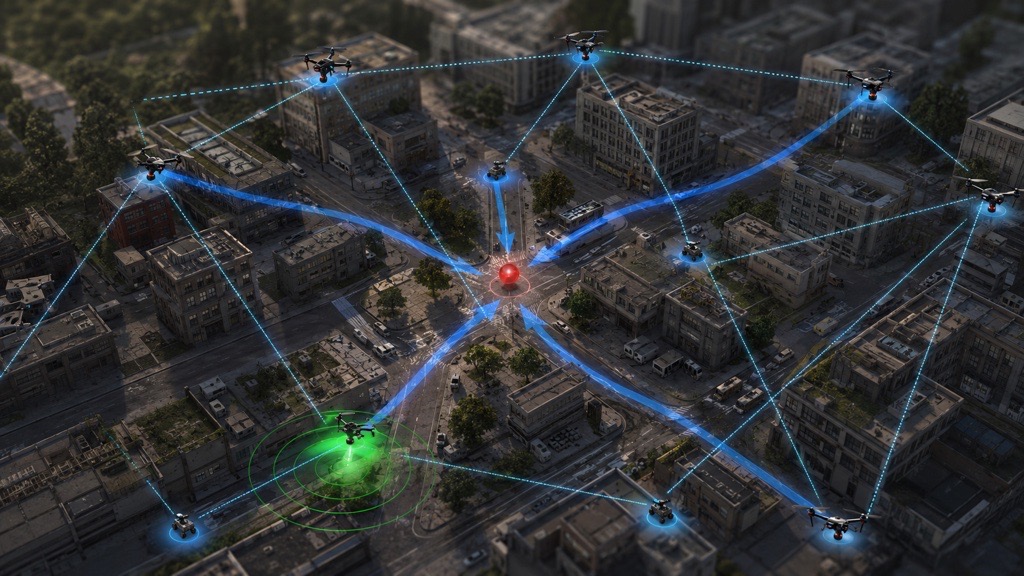
Sustainable pulsing is the ability of swarmers, which take their positions in a dispersed fashion, to repeatedly respond to a threat from all directions simultaneously, and to re-organize themselves, without human direction, as the threat evolves. In a forest fire, for example, flames move in very different directions with different intensity depending on many environmental factors. An accurate plan of action is not possible in advance. But the swarm workforce can “attack” the fire from different directions, and different domains (air, ground). Importantly, the swarm can “self-re-organize” as the fire’s location and intensity changes.
Delegation of Control
Sustainable pulsing moves operational control from the “center” (where a human or algorithm oversees the whole operation) to the “edge” (where squads of robots respond to their environment “here and now”).
These units will be widely dispersed throughout the area of operation and will likely represent all the various sea, air, and ground services—putting a premium on inter-service coordination for purposes of both sharing information and combining in joint "task groups."
3.1.2 Ubiquitous Sensing
To perform sustainable pulsing, swarm units are not just in communication with each other; each unit relies on others to act effectively to assist it. The swarm also acts as a vast, integrated and hybrid sensory system that can selectively distribute both specific targeting information and overall top sight about conditions in and around the area of operation.
3.2 A Swarming Operational Scenario
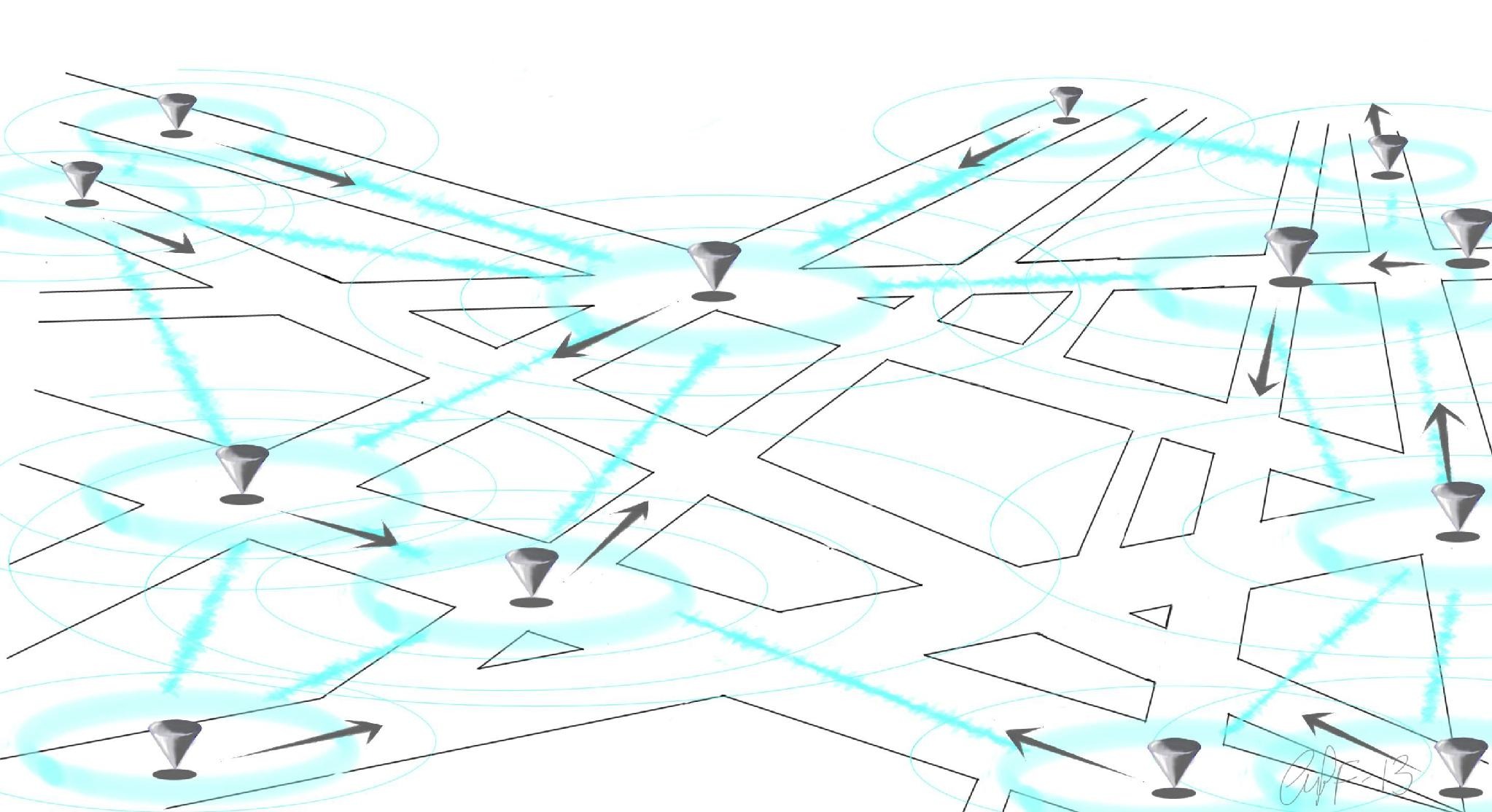
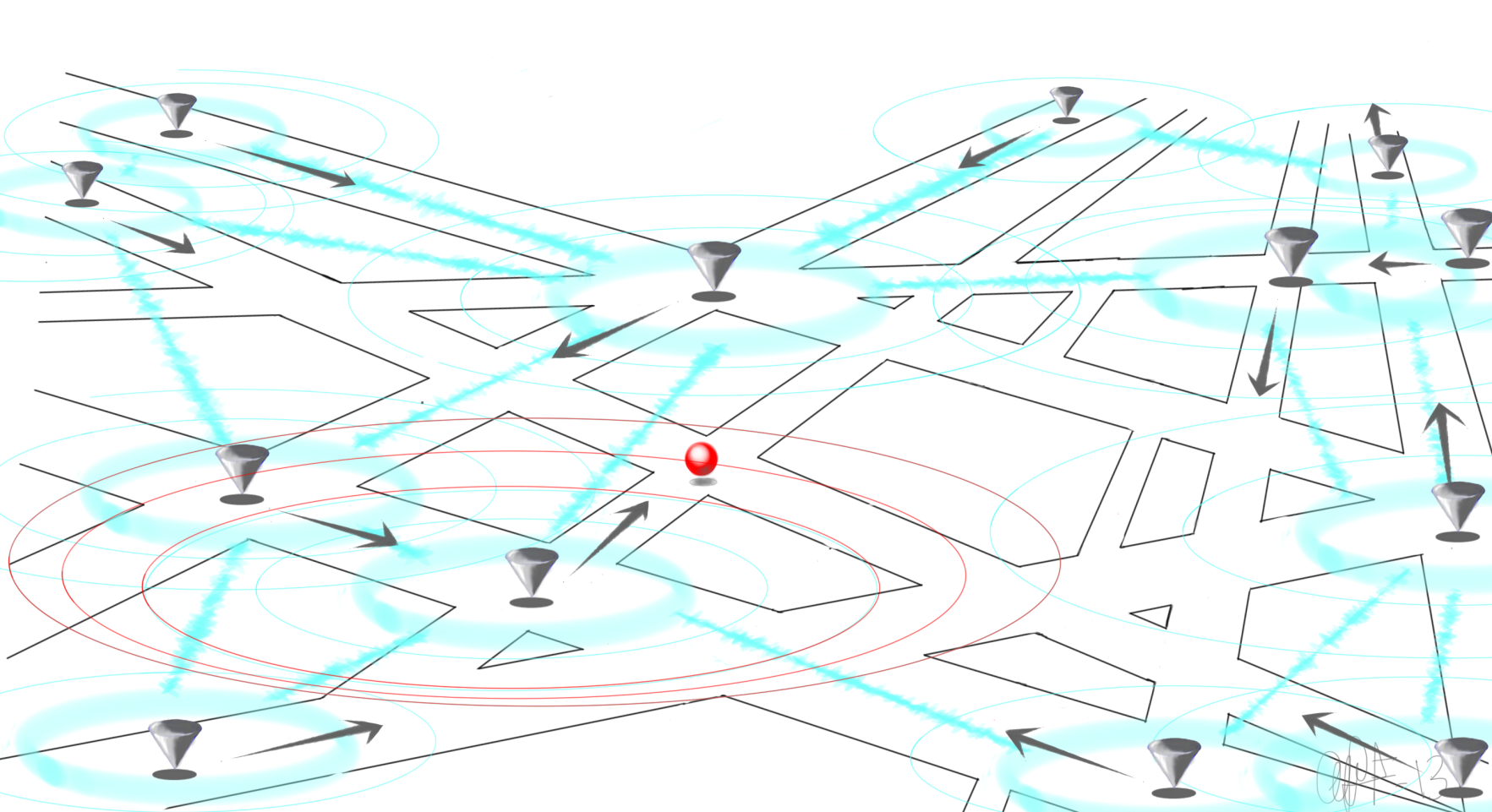
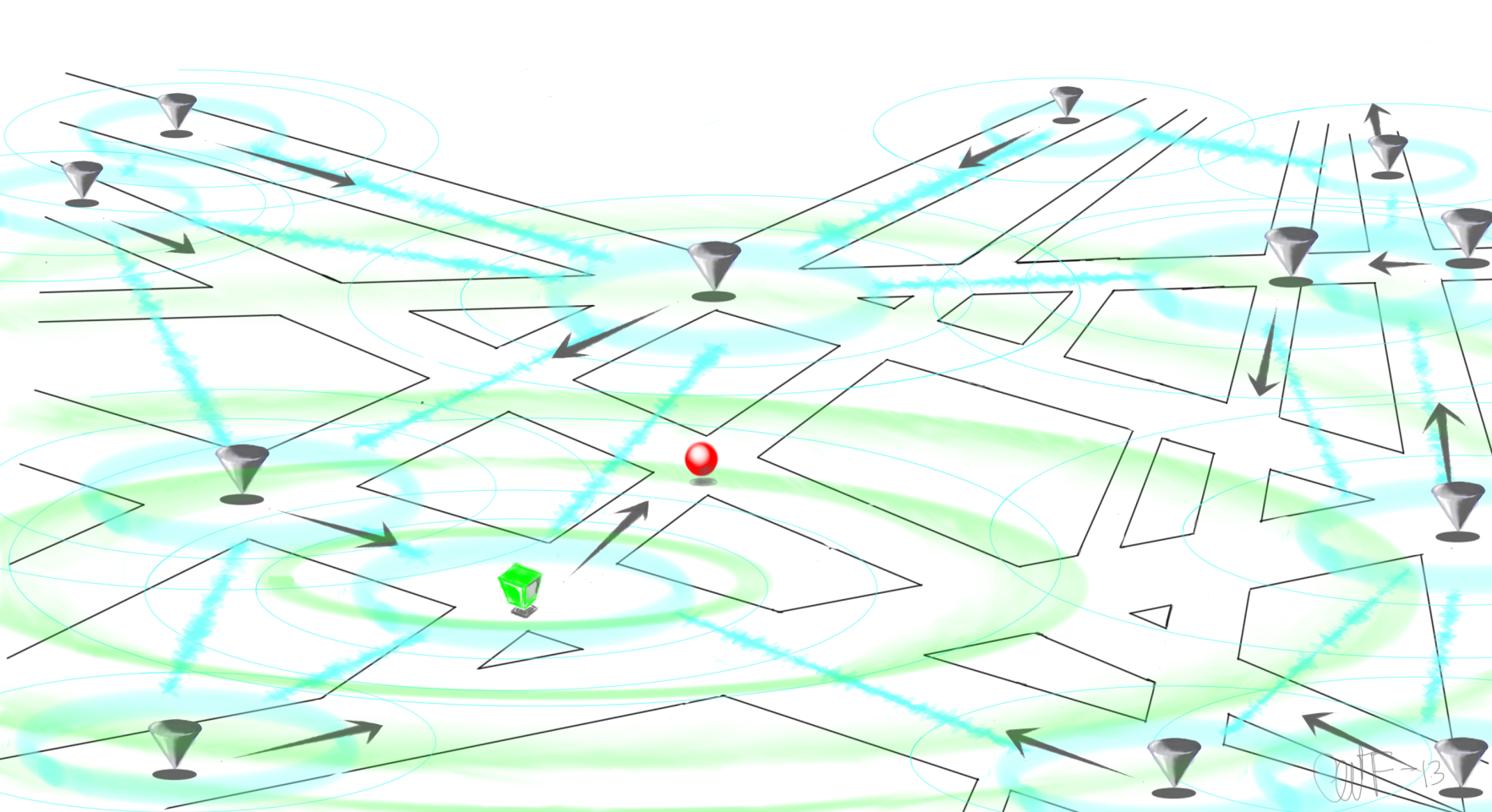
To understand how a modern swarm operation would work, consider this example (Figure 1). Robots (in air, on land, on water or under it) are dispersed to provide ubiquitous sensing of the area of operation. Each service unit can move within a defined space and can trade information with its neighbors. When a service unit detects a threat (figure 2), the alarm spreads to the neighbors (figure 3), and the swarm self-re-organizes to focus on the threat (figure 4). Sustainable Pulsing remains active until the threat is neutralized (figure 5). Lastly, any service unit that has moved “out of place” for the action returns to its assigned position to restore the ubiquitous sensing (figure 6).
1. Ubiquitous Sensing | 2. Threat Discovery |
3. Raise Alarm | 4. Sustainable Pulsing |
5. Threat Neutralization | 6. (Re-)Dispersion to Ubiquitous Sensing |
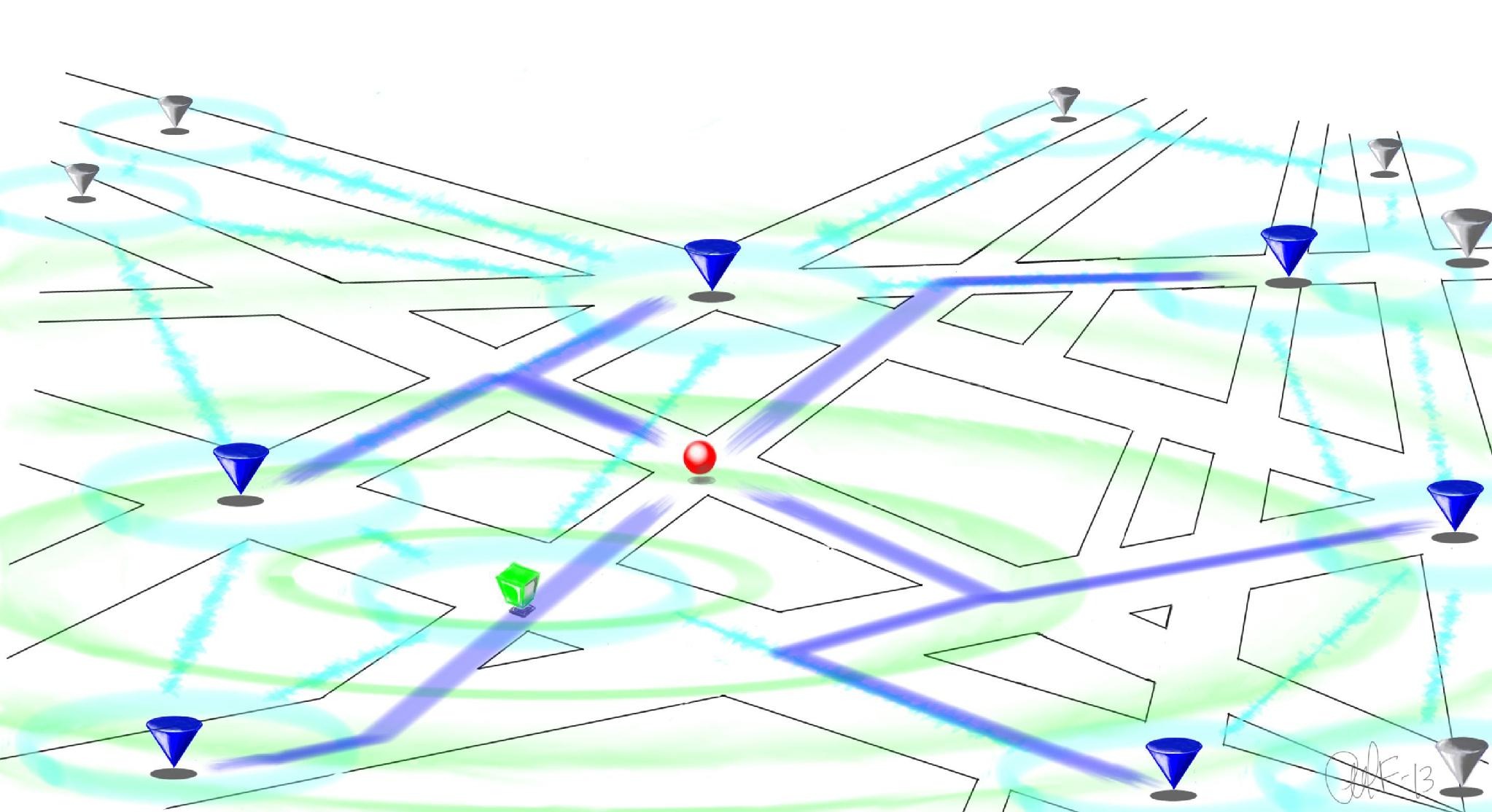
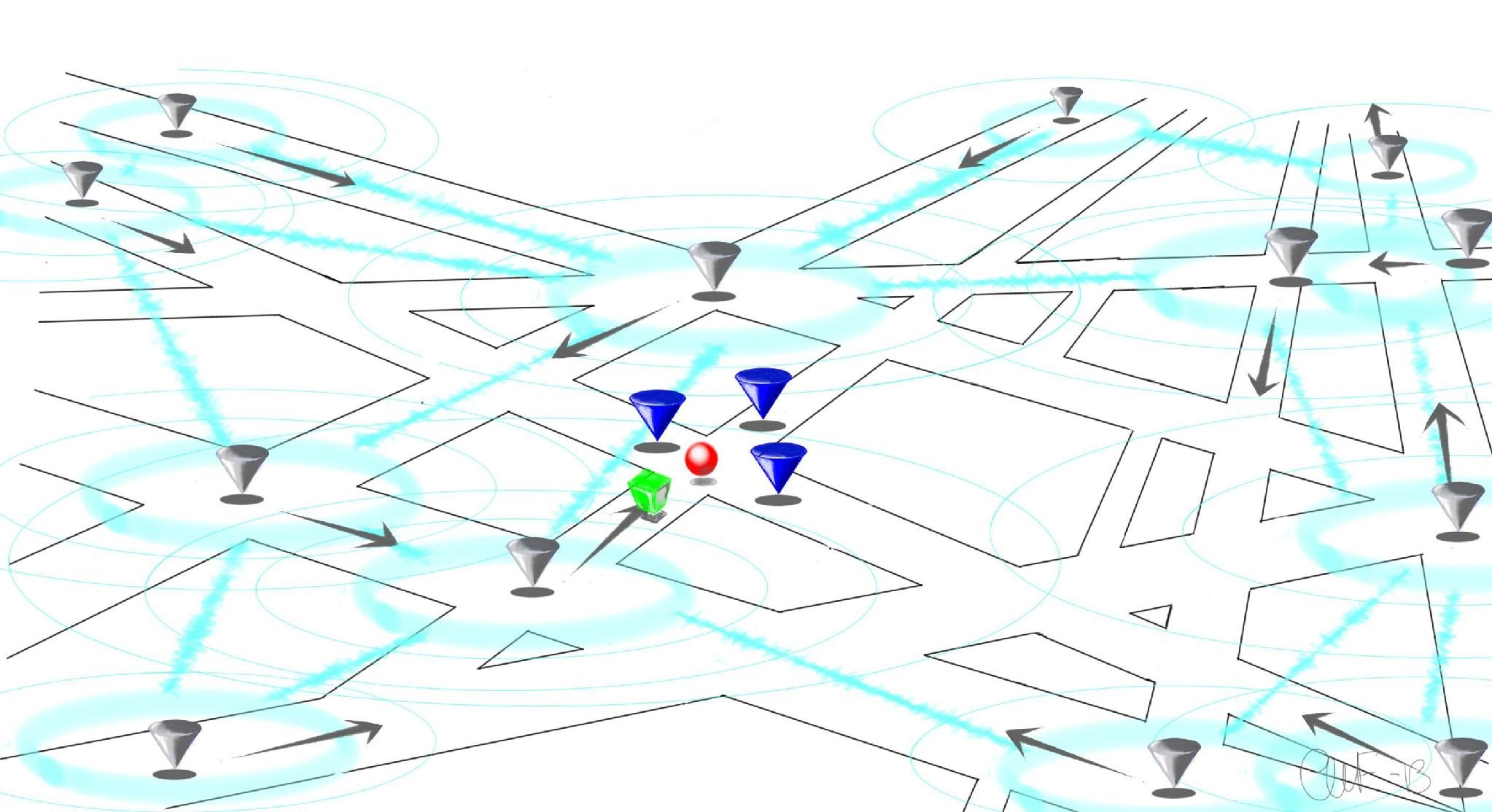
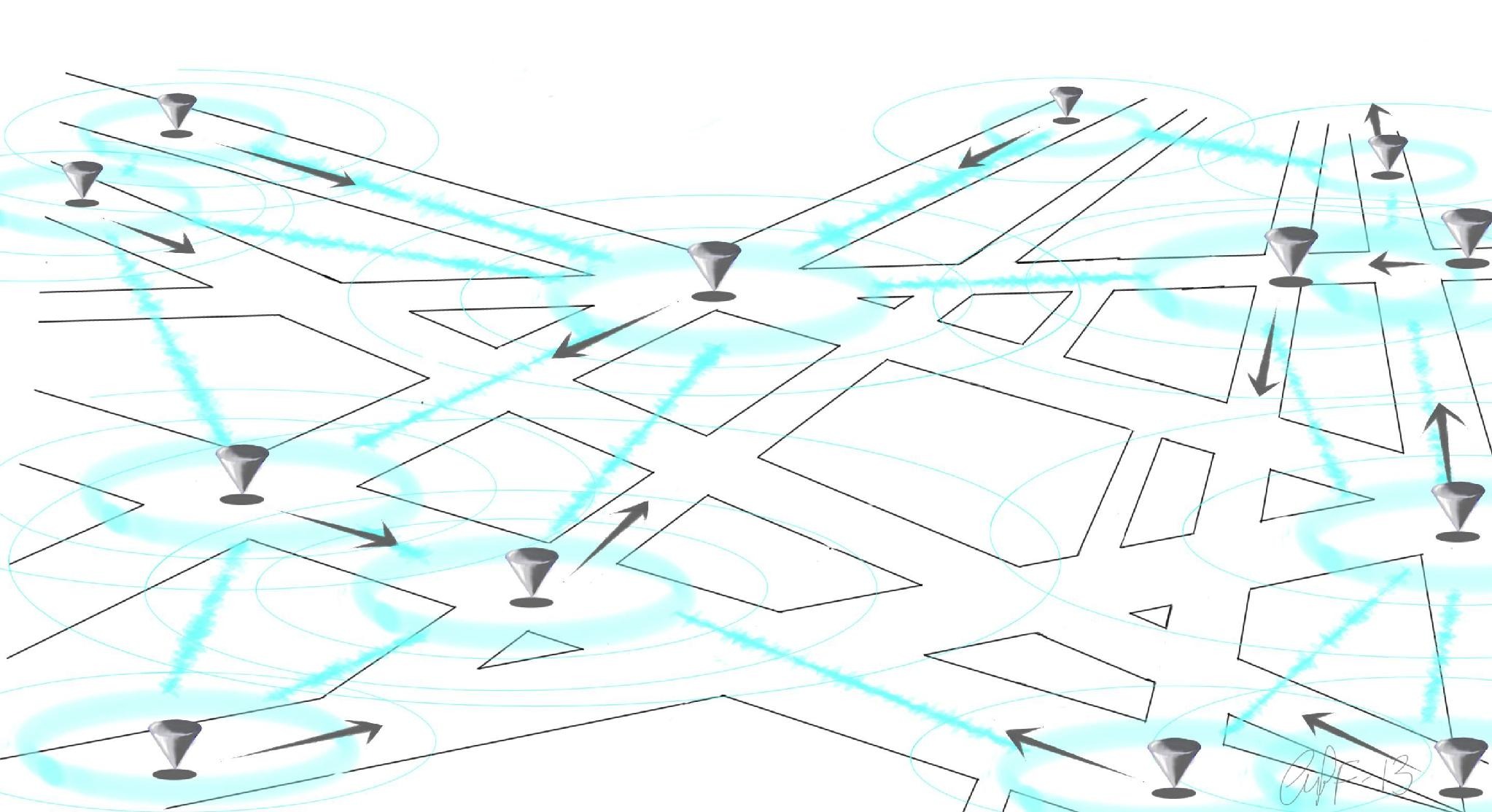
A Swarming Operational Scenario
4.TII’s Swarm Autonomy Program
To apply these operational principles of sustainable pulsing and ubiquitous sensing to real-world needs, TII is committed to building useful, scalable, practical swarm-robot solutions in the UAE through its Autonomous Robotics Research Center (ARRC). The center is working on platforms that can underlie swarm applications on land, in the air, and both on and under the sea. These include:
Aerial Swarms, using Unmanned Aerial Vehicles (UAVs). These are mapping, inspection and other functions carried out by robots that fly – commercially available drones, but also specially designed indoor drones and “nano-drones” (drones that weigh less than 250 grams, which can maneuver in spaces that won’t accommodate standard aerial drones).
Ground Swarms, using Unmanned Ground Vehicles (UGVs). These are swarms that use robots that travel on wheels or legs, on land.
Marine Swarms, using Unmanned Surface Vehicles and Unmanned Underwater Vehicles (USVs & UUVs). These swarm applications are executed by surface-traveling vehicles and by unmanned robot submarines.
TII’s contribution is distinguished by its holistic, end-to-end, in-house development. This includes designing swarm systems (both individual robots and their means of interacting with one another); devising all the AI systems deployed in the swarm solution; creating rigorous testing regimens, and finding the right way to achieve human-swarm symbiosis (in which the human functions as a well-integrated member of the swarm, not just an overseer). TII researchers have already contributed advances in robot-to-robot communication, methods for planning robot movements, and algorithms that give each robot the ability to make autonomous decisions.
4.1 Testing and Validation Testbed
Central to TII’s experimental validation efforts is the Swarm Intelligent Robotic Behaviors (SIRB) testbed, a dedicated platform for experiments in swarm autonomy. The unique configuration of this system fosters collaborations with leading institutions in crucial research fields: AI, autonomous decision making, and, of course, robotics. TII’s system is currently engaged in extensive collaborations with the California Institute of Technology, the Czech Technical University in Prague, New York University, and other leading research institutions.
Practically, this setup allows direct experimentation with swarm robots for border protection, wide-area surveillance, and disaster response based on a testbed which implements a reference system. All three missions share similar requirements: persistent coverage, adaptability to sparse and dense regions, and resilience when some units stop working correctly due to adverse conditions. The testbed makes it possible to validate how multiple autonomous agents redistribute coverage, re-prioritize targets, and maintain situational awareness when communication is limited or when parts of the environment become inaccessible.
This capability is particularly valuable because such behaviors cannot be meaningfully tested in traditional labs or purely simulated environments. The SIRB testbed enables controlled, repeatable trials where coordinated autonomy, adaptive task allocation, and mission reconfiguration are tested against realistic operational constraints. This produces physical systems that provide solutions which are directly transferable to field scenarios rather than remaining purely theoretical.
5. Core Technologies and System Architecture
TII’s swarm capabilities are enabled by core technological advances focused on performance, stability, and reliability.
5.1 TII’s Swarm Architecture
The key design advances are:
Distributed AI and edge intelligence, allowing complex decision-making to occur locally on each robotic unit rather than relying on a remote Control Center. This is particularly relevant in civil defense scenarios where connectivity may be degraded, or latency is a critical problem. For example, during wildfire monitoring or post-disaster assessment, an aerial unit can locally detect abnormal thermal patterns or structural anomalies and immediately classify them as high-risk events. Instead of waiting for centralized validation, the unit can autonomously trigger nearby agents to converge for confirmation and continuous monitoring, while ground units adapt their inspection routes. This local decision loop significantly reduces reaction time and enables coordinated response even when communication with command centers is intermittent.
Mesh networking and inter-agent communication, ensuring resilient connectivity across large and infrastructure-poor operational areas. Civil protection missions, such as wide-area search and rescue or flood monitoring, often take place in environments where traditional communication infrastructure is damaged or unavailable. In conventional centralized systems, loss of a single communication link can degrade the entire operation. By contrast, the decentralized inter-agent communication approach allows robots to exchange information locally and relay data across the swarm. For instance, if a group of agents operating in a remote valley loses direct connection to the base station, they can maintain situational awareness by dynamically routing information through intermediate nodes. The swarm can also reorganize its communication structure based on task grouping and spatial distribution, maintaining operational continuity despite partial link degradation.
Real-time mission planning and adaptive re-tasking, enabling the swarm to adjust dynamically to evolving civil emergency conditions. In a typical civil defense deployment, an initial mission may involve uniform area coverage for damage assessment or environmental monitoring. However, if a subset of agents detects a critical event—such as a localized fire resurgence, a chemical spill, or newly identified blocked access routes—the system can autonomously re-prioritize tasks. Nearby units are reassigned to detailed inspection and persistent monitoring, while others expand coverage to compensate for the redistribution. This decentralized re-tasking, driven by shared situational awareness and onboard autonomy, allows the operation to continue efficiently without waiting for manual replanning, which is essential in time-sensitive disaster response and public safety operations.
Vision-based localization (situational awareness without the need for GPS connection) Vision-based localization allows swarm members to navigate and coordinate when navigation via satellite positioning is unreliable or unavailable (for example, urban canyons, indoor spaces, smoke, dust, damaged infrastructure, or in cases of deliberate interference by adversaries). The practical value is continuity of operation without dependence on external positioning signals: robots estimate their motion from onboard cameras (visual odometry), recognize features/landmarks, and maintain relative positioning within the team. A concrete civil-defense example is post-disaster search and rescue inside or around partially collapsed buildings: aerial robots can map corridors and open courtyards while ground robots move through interior passages, both maintaining consistent local maps and relative team geometry without GPS. This enables persistent coverage, safe separation, and reliable handoff of points of interest (e.g., blocked routes, void spaces, heat signatures) even when connectivity to external infrastructure is intermittent.
5.2 Algorithmic Advances
TII has also pioneered important algorithmic advances, particularly in enhancing swarm responsiveness and reliability in unpredictable real-world conditions. The major breakthroughs are:
Adaptive Flocking Control: TII researchers have adapted “Gaussian-kernel-based interaction modelling” -- a mathematical technique that regulates how strongly each neighbor influences a robot’s motion as a smooth function of distance. In simple terms, the kernel provides a continuous “influence weight”: very close neighbors contribute strongly (to prevent collisions and preserve cohesion), while farther neighbors contribute less (to avoid coordinating too closely in ways that would negatively affect the swarm’s effectiveness). This replaces brittle rules with a continuously tuned interaction field that naturally stabilizes formation-keeping, while still allowing flexibility.
In practice, this improves swarm performance in cluttered or mixed environments by enabling smooth, autonomous group splitting and merging without loss of stability. For example, during disaster-area mapping in an urban district, the swarm may approach a narrow street, canyon or a partially blocked corridor: the formation can compress and split into two sub-teams to pass obstacles on different sides, then merge back into a coherent formation once clear—without manual reconfiguration, without abrupt control switches, and with reduced risk of inter-robot conflicts. This adaptive formation control increases the swarm's robustness and agility in overcoming obstacles, which are critical in infrastructure-rich environments such as industrial plants, urban settings, forests, and any indoor space.
Resilient coordination through decentralized communication and agent-level autonomy: Reliable coordination in real operations cannot assume stable communications or continuous connectivity to a central command node. In civil defense and public safety scenarios—such as coastal surveillance, large-scale search and rescue after flooding, or infrastructure inspection following an industrial incident—radio links may be intermittent due to terrain, damaged infrastructure, or environmental interference. Traditional centralized multi-robot systems often degrade or stall when the connection to a control center is lost.
The TII system instead adopts a decentralized coordination model, where agents maintain local situational awareness, exchange information opportunistically with nearby units, and continue executing mission objectives even under partial communication loss. For example, during flood-response mapping over a wide and partially submerged area, aerial units may temporarily lose direct communication with the command post due to distance or obstacles. Rather than halting, the swarm maintains coordinated coverage by relaying critical updates (e.g., newly detected stranded civilians, blocked access routes, or changing water boundaries) through neighboring agents that act as dynamic communication bridges. An additional layer of agent-level autonomy further enhances robustness: a supervisory software entity embedded in the operational loop can interpret mission context, prioritize events, and suggest or authorize local re-tasking without requiring constant human micromanagement. This agentic decision layer does not replace the human operator but supports civil defense officers by filtering high-value alerts, aggregating distributed observations, and maintaining mission continuity when connectivity is degraded. The result is a system that remains operationally coherent, adaptive, and responsive in communication-denied or infrastructure-poor environments, rather than experiencing full mission degradation due to single-link failures.
6. Key Applications and Use Cases
TII’s work focuses both on these technologies and on their adoption for applications that deliver high value and address national-security challenges unique to the region. These include:
6.1 Infrastructure and Environmental Monitoring
Swarms perform coordinated inspections of critical assets like pipelines, bridges, and offshore platforms. They are also being used in the UAE for spotting wildfires, monitoring air quality and mapping environmental hazards on land and at sea.
6.2 Disaster Management and Search & Rescue (SAR)
Swarm systems are deployed for rapid area coverage and victim-finding in post-disaster zones. Swarms can go where human rescuers would be endangered, helping to preserve humans from injury. Swarms’ innovative navigation systems are particularly useful in settings where GPS is not available.
A decentralized approach is key here; for example, research has demonstrated decentralized UAV flocking behaviors for search-and-rescue operations that do not require explicit communication between neighboring robots. They rely instead on local detection and visual communication channels to maintain efficiency and scalability (see section 3 for a description of Swarming Operations).
As an example, a reference scenario discussed in the past by TII with the California Institute of Technology and other partners concerns the use of coordinated aerial and ground robotic systems for early wildfire monitoring in California’s high-risk regions. In such environments, fires can spread rapidly across large and heterogeneous terrain, where manual patrols or single-robot deployments are insufficient for timely detection.
In this concept of operations, multiple aerial robots, ground units, and distributed sensors monitor different sectors simultaneously. If one aerial unit detects a thermal anomaly or smoke signature, it can locally flag the event and cue nearby agents for verification and persistent observation, while the rest of the system maintains baseline coverage. This parallel sensing and distributed decision-making significantly reduce detection wait times compared to a single autonomous robot scanning sequentially.
Swarm robots provide a clear operational advantage over non-swarm systems. A single autonomous robot is limited in spatial coverage and represents a single point of failure. A teleoperated robot depends on continuous human attention and stable communications, which restricts search range and responsiveness. In contrast, distributed autonomy enables many robotic “eyes” to search in parallel, dynamically adapt coverage density, and continue operating even if some units lose connectivity or become unavailable.
For civil defense applications such as wildfire monitoring, this translates into faster localization of emerging hotspots, more persistent situational awareness, and more reliable support to emergency decision-makers over large areas.
6.3 Border Security and Public Order
This includes aerial swarms for wide-area monitoring and autonomous marine perimeter patrols. In both air and sea, swarms can maintain constant surveillance, because their robot members can be constantly rotated in and out of formation.
6.4 Autonomous Mobility
TII is researching next-generation logistics solutions, including swarms that act as convoys of UGVs to make for a more efficient supply chain. Autonomous mobility swarm technology is also being developed to undergo a system of autonomous water taxis.
7. Experimental Platforms and Demonstrations for Future Use Cases
TII’s multi-domain expertise is also evident in its work on experimental platforms across air, land, and sea. These include:
Aerial Swarms (UAVs). TII has leveraged challenging real-world environments, such as the Abu Dhabi desert, for extensive outdoor testing of UAV flocking, which ensures robustness against harsh conditions, high winds (gusts of up to 11 meters a second), and unstable communication links. TII researchers have developed swarms that persist in the face of these challenges, demonstrating an ability to split and merge in conditions that would defeat other swarm robots.
Ground Swarms (UGVs). Research areas here focus on navigating as a cohesive group, avoiding obstacles in changing environments, and moving as a convoy.
Marine Swarms (USVs and UUVs). TII is developing autonomous surface vehicles (USVs) and unmanned underwater vehicles (UUVs) for sophisticated sensing formations. For example, researchers are currently trialing coordinated multi-vehicle swarms that will operate at sea.
8. Meeting the Key Challenge: Real-World Robots that Solve Real-World Problems
The central challenge of swarm robotics is finding real-world ways to build on the principle of biomimicry, which is easier to state than it is to turn into working robots in the real world. The ideal of solutions emerging from the behavior of many cooperating robots can run up against practical hurdles. For example, it can be difficult to assure that the behavior of multiple robots is adding up to the desired result.
TII swarm robotics research, in collaboration with leading institutions in AI, autonomy, and robotics globally is focused on overcoming these kinds of obstacles real-world deployment. In particular, TII researchers are pioneers in several crucial areas:
Cross-Platform Orchestration: A major frontier is coordinating heterogeneous robotic teams within a single mission. In practice, orchestration is achieved through a shared mission software layer that encodes objectives, priorities, and constraints, while distributed task allocation assigns roles dynamically based on real-time observations. In operational workflows, a supervising officer defines intent and operational boundaries, while the system autonomously proposes and executes task distribution across platforms. For example, aerial units can provide wide-area scanning, ground robots can perform close inspection in access-constrained areas, and static or mobile sensors can maintain persistent monitoring. This reduces operator workload and enables coherent multi-domain cooperation without requiring manual micromanagement of each asset.
Ethical Autonomy: Ethical autonomy in this context focuses on accountability, transparency, and proportional data use in civil and safety-critical deployments such as surveillance, emergency response, and public-area monitoring. Research efforts address how autonomous systems justify and log decisions, ensure traceability of re-tasking actions, and maintain human supervisory oversight. Privacy-sensitive operations are handled through event-driven sensing rather than indiscriminate data collection, combined with on-edge processing that filters and aggregates information before escalation. This approach supports responsible deployment while increasing operator trust, as every autonomous action can be traced back and be “explainable”.
Adaptive Learning: Robots traditionally perform well in predictable environments, but real-world deployment requires rapid adaptation to changing conditions. TII’s work on adaptive learning builds on learning-based flight and control research (e.g., “learn-to-fly” approaches), where robots improve robustness through repeated exposure to disturbances and environmental variability. In a swarm setting, this extends from individual adaptation to shared behavioral refinement: experience gathered by one agent informs coordination parameters and tasking behaviors of the team.
Next-Generation Low-Level Control: TII’s work also aims to improve stability and responsiveness of multi-robot systems under noise, disturbances, and partial observability. Rather than introducing entirely new control paradigms, the focus is on integrating disturbance-aware and higher-order control strategies within a decentralized coordination framework resulting in smoother execution.
Advanced Sensing and AI: TII’s research in this area does not focus on the swarm per se. Instead, swarm applications are included in the integration of advancements for mission planning and coordination at different scales. Within a swarm, the advantage is not only higher sensing accuracy per unit but also distributed spatial sampling: multiple agents collect fine-grained measurements across an area and fuse them into a more robust environmental estimate.
Conclusion
TII recognizes swarm robotics as both a technological leap and a strategic enabler for achieving unprecedented robustness, adaptability, and scale in robotic autonomous systems for land, air, sea and space domains.
TII’s core mission is defined by its commitment to building comprehensive, sovereign multi-agent capabilities across diverse operational domains. By focusing on pragmatic, robust, and AI-driven solutions, TII is pioneering the path toward closing the long-standing gap between the basic principle of swarm biomimicry and the reality of real-world robots in challenging environments. Many robotics challenges should and can be addressed with collective solutions – intelligent swarms for intelligent missions.